
About James Lopata
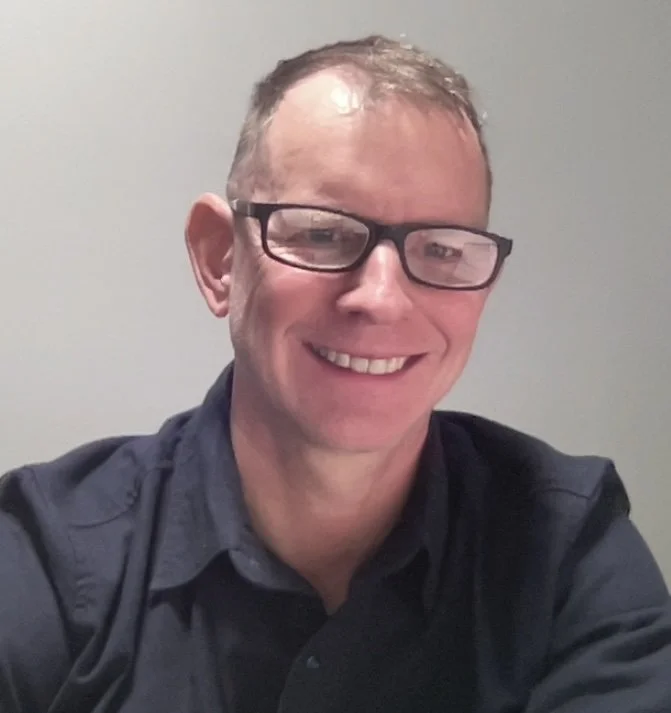
For two decades, I coached leaders at organizations like Tesla, Meta, GE Healthcare, and Boston Children’s Hospital. I presented at the Harvard Institute of Coaching as a Fellow there, advised the senior leadership team at the New York State Attorney General’s Office, and built a multimillion-dollar nonprofit from scratch.
Then life demanded something different.
During the pandemic, I moved home to Rochester to help my father transition at the end of his life and to support my mother as she began experiencing dementia. In the middle of my own search for meaning, I took an unusual step for someone with my background:
I accepted a frontline role as a career counselor at East House, a highly respected behavioral-health and recovery-services organization.
People in my coaching world were confused. But I knew I was missing something essential.
From the C-suite, I could see what leaders intended to build. But I couldn’t see how those intentions were landing at the ground level—where culture actually lives or dies, where staff either stay or quietly prepare their exit, where policies transform into practice or into pressure.
Working both on the ground and with executives gave me a perspective I couldn’t have gained any other way.
I saw how organizational stress doesn’t just trickle down—it accelerates, collecting in the basement where frontline staff absorb it first.
I watched compassionate, capable people burn out not from the work itself, but from systems that had stopped breathing.
That experience, combined with my background in polyvagal theory and organizational psychology, led me to formalize something I had been developing for more than a decade:
The Organizational Nervous System Model
A framework that helps leaders understand whether their organization is operating in a Frozen, Braced, or Breathing state—and what to do about it.
The 2026 Crisis
Human-services organizations are entering a perfect storm.
$1.7 billion in SAMHSA block-grant funding is scheduled to terminate
Over $1 trillion in additional federal and state funding is at risk over the next several years
Federal work requirements are tightening
Compliance documentation is intensifying
Competition for talent is escalating
Staff are burning out faster than organizations can hire
The organizations that will survive—let alone thrive—are not the ones with the most money.
They are the ones that know how to help their staff and systems breathe under pressure.
I wrote about the scope of this challenge in Governing.com in my essay:
My Approach
I work with human-services leaders who know their culture is strained but who don’t want another “initiative” or “restructuring.”
Together, we uncover where your organization is operating—Frozen, Braced, or Breathing—and build the practical, human-centered pathways needed to retain your best people and navigate the 2026 workforce shift.
This isn’t about adding programs. It’s about understanding how stress moves through your organization and reshaping the way leadership responds.
What I Bring
Harvard Institute of Coaching Fellow (ICF PCC)
Board Member, Trillium Health
Founder of a nonprofit grown from $0 to $3.5M
Published researcher (Routledge) on coaching supervision
Keynote speaker (SHRM conferences)
Executive coach to C-suite leaders in technology, healthcare, and human services
Leadership presenter (Wharton, Kellogg, Northwestern)
Author of The Breathing Organization (forthcoming 2026)
I also lead weekly meditation sessions and work with Zen students, connecting inner practice with organizational transformation.
Ready to assess where your organization stands?
Take the free Organizational Survival Assessment.